


SUN
EARTH

An animation of the inner Solar System planets' orbit around the Sun. The duration of the year is the time taken to go around the Sun.
MUSIC TO COME DOWN 2 EARTH, ALL NATURE IS BEAUTIFUL
Gambo is the name of an unidentified carcass of an animal that washed up on the beach.
A garden is a space, usually outdoors, set aside for the cultivation, display, and enjoyment of plants and other forms of nature. The single feature identifying even the wildest wild garden is control.
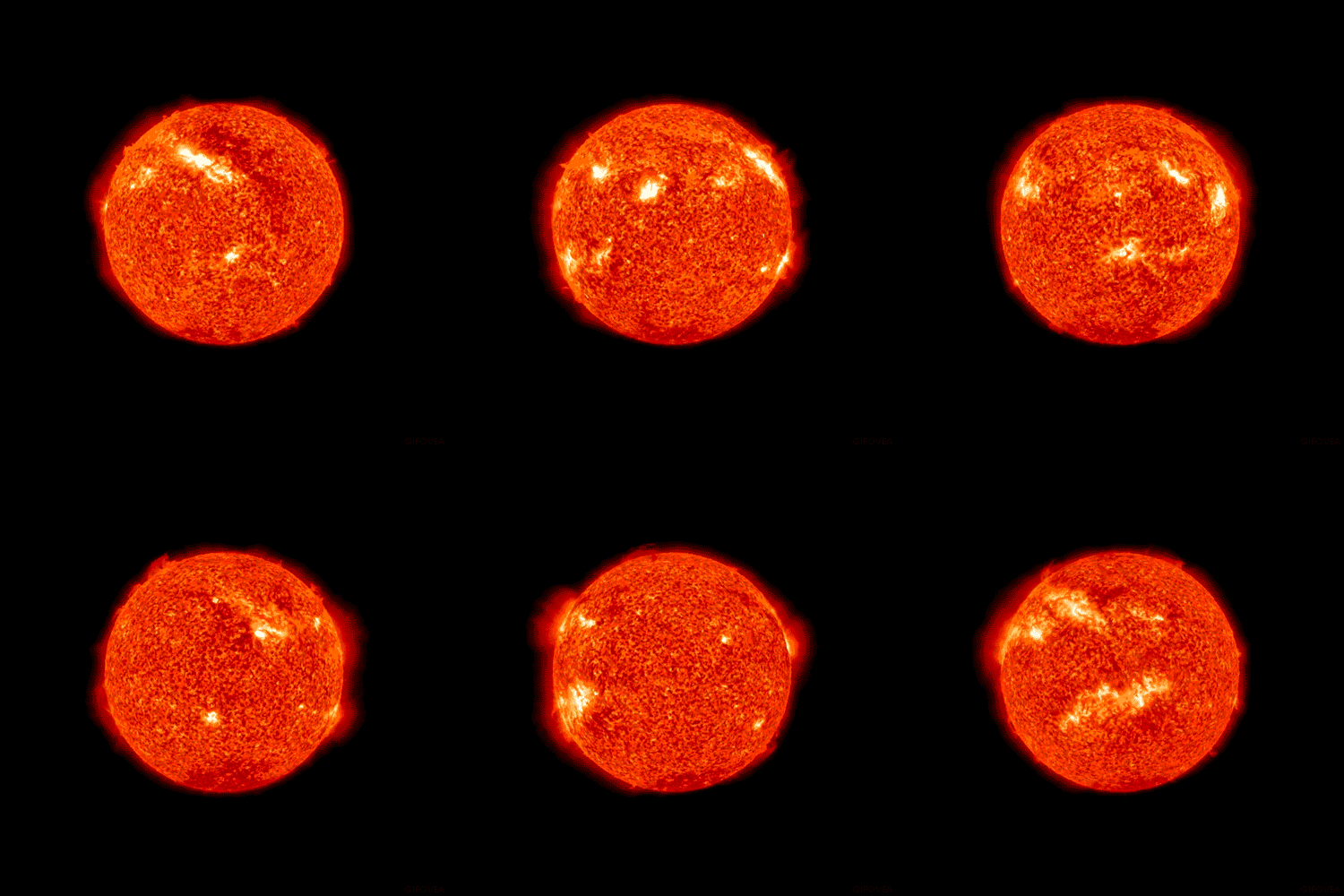
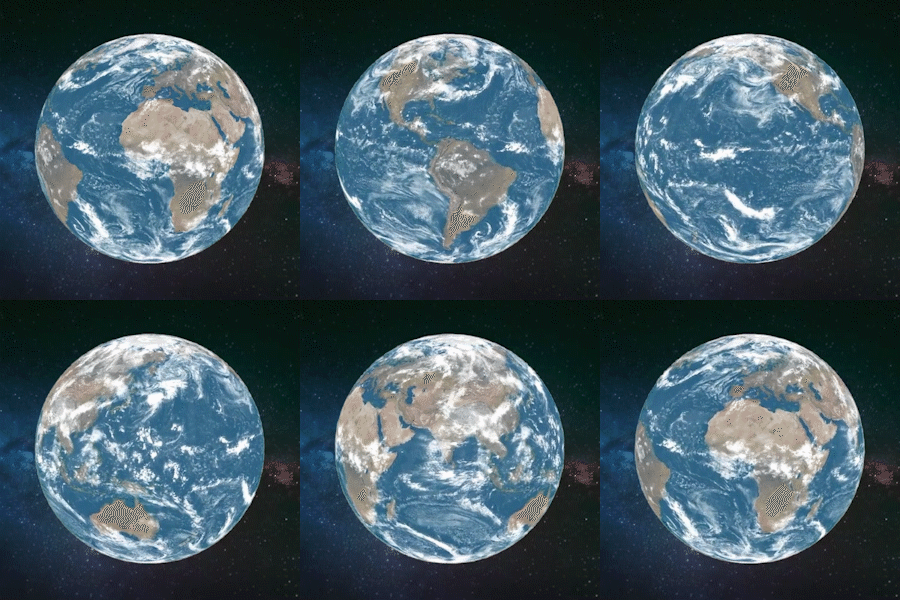
A year is a unit of time based on how long it takes the Earth to orbit the Sun.[1] In scientific use, the tropical year (approximately 365 solar days, 5 hours, 48 minutes, 45 seconds) and the sidereal year (about 20 minutes longer) are more exact. The modern calendar year, as reckoned according to the Gregorian calendar, approximates the tropical year by using a system of leap years.
The term 'year' is also used to indicate other periods of roughly similar duration, such as the lunar year (a roughly 354-day cycle of twelve of the Moon's phases – see lunar calendar), as well as periods loosely associated with the calendar or astronomical year, such as the seasonal year, the fiscal year, the academic year, etc.
Due to the Earth's axial tilt, the course of a year sees the passing of the seasons, marked by changes in weather, the hours of daylight, and, consequently, vegetation and soil fertility. In temperate and subpolar regions around the planet, four seasons are generally recognized: spring, summer, autumn, and winter. In tropical and subtropical regions, several geographical sectors do not present defined seasons; but in the seasonal tropics, the annual wetand dry seasons are recognized and tracked.
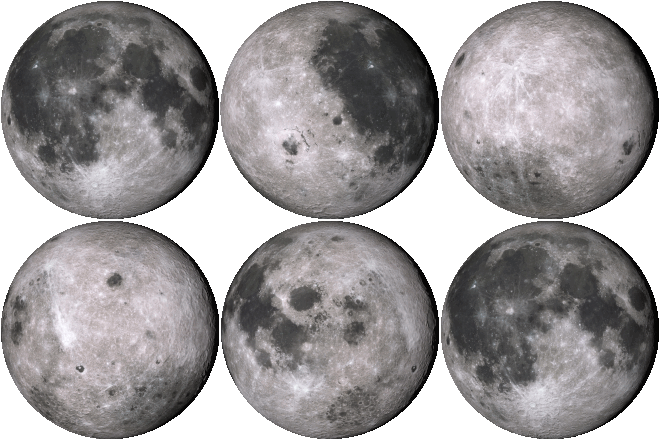
By extension, the term 'year' can also be applied to the time taken for the orbit of any astronomical object around its primary – for example the Martian year of roughly 1.88 Earth years.
The term can also be used in reference to any long period or cycle, such as the Great Year.[2]
A calendar year is an approximation of the number of days of the Earth's orbital period, as counted in a given calendar. The Gregorian calendar, or modern calendar, presents its calendar year to be either a common year of 365 days or a leap year of 366 days, as do the Julian calendars. For the Gregorian calendar, the average length of the calendar year (the mean year) across the complete leap cycle of 400 years is 365.2425 days (97 out of 400 years are leap years).[3]
In English, the unit of time for year is commonly abbreviated as "y" or "yr". The symbol "a" (for Latin: annus, year) is sometimes used in scientific literature, though its exact duration may be inconsistent.[citation needed]